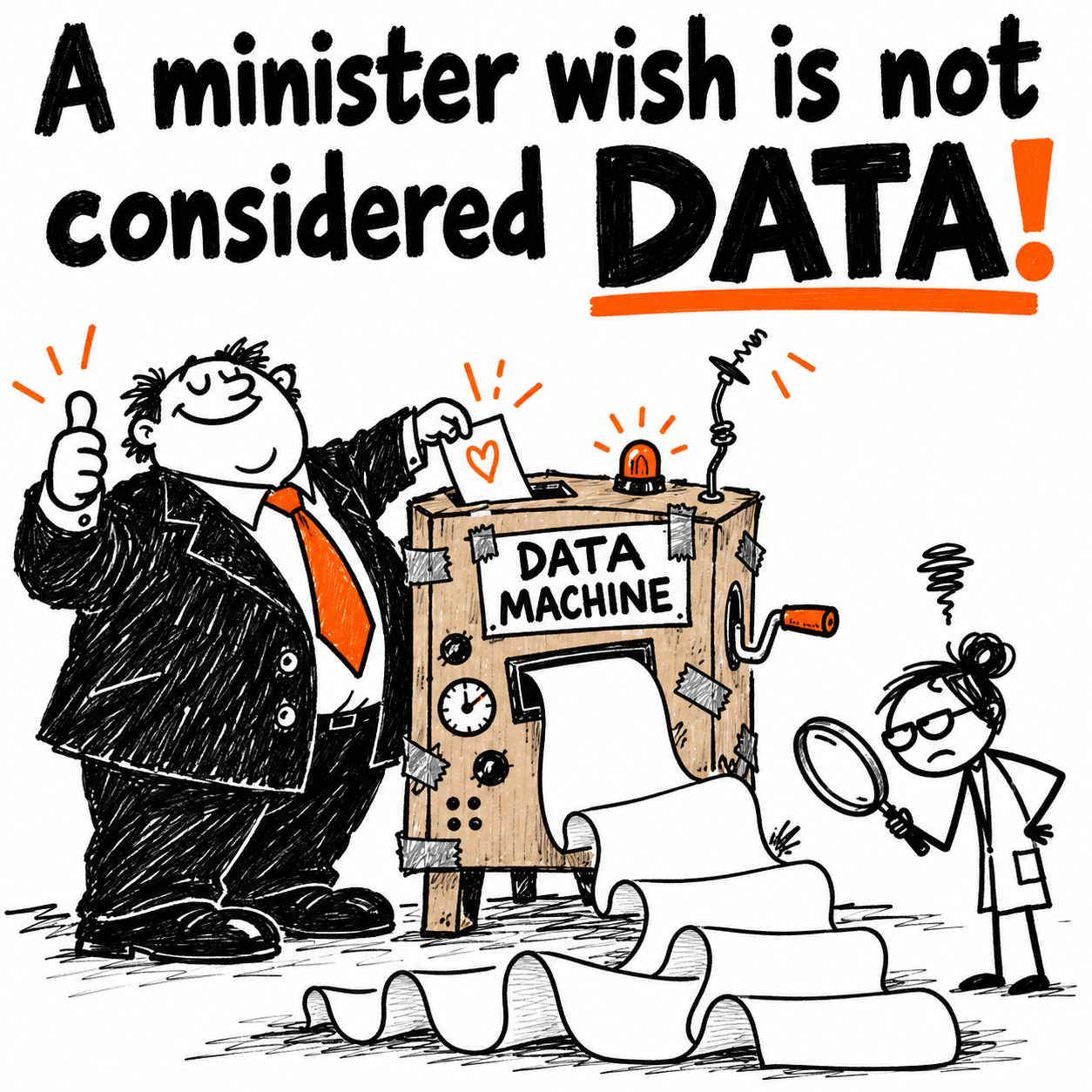
I came across an image with that sentence, and it stayed with me because it describes a problem we have faced in Aruba for far too long.
Government departments are often asked to carry out projects shaped by a minister’s priorities, while the needs and experiences of the people affected receive far less attention. An idea may be well intentioned. It may even be popular. But that does not make it an evidence based response to what the community needs.
I do not place all the blame on individual ministers. We have not built a strong habit of working from long term, publicly accountable policies that survive a change of government. In culture, the absence of a current policy has left too much room for each new minister to set a new direction. Other sectors face similar challenges.
When priorities change with every administration, departments struggle to build on their work. Community organizations are asked to adjust course again and again. Projects can gain support because they fit a political agenda, while less visible needs remain unanswered.
And yes, we should be honest about the political incentive. A minister who must seek reelection may favor projects that produce a visible result before the next election. That incentive should not determine our development priorities.
We need to ask better questions before committing public money: What does the community say it needs? What does the evidence show? Who benefits? How will we know whether the project worked? And how does it fit a policy that extends beyond one minister’s term?
Ministers should lead. Communities should be heard. Data should inform decisions. A serious policy should connect all three.
A minister’s wish can start a conversation. It cannot be the evidence that ends it.
Masha bon bisa, pues, e artwork publica