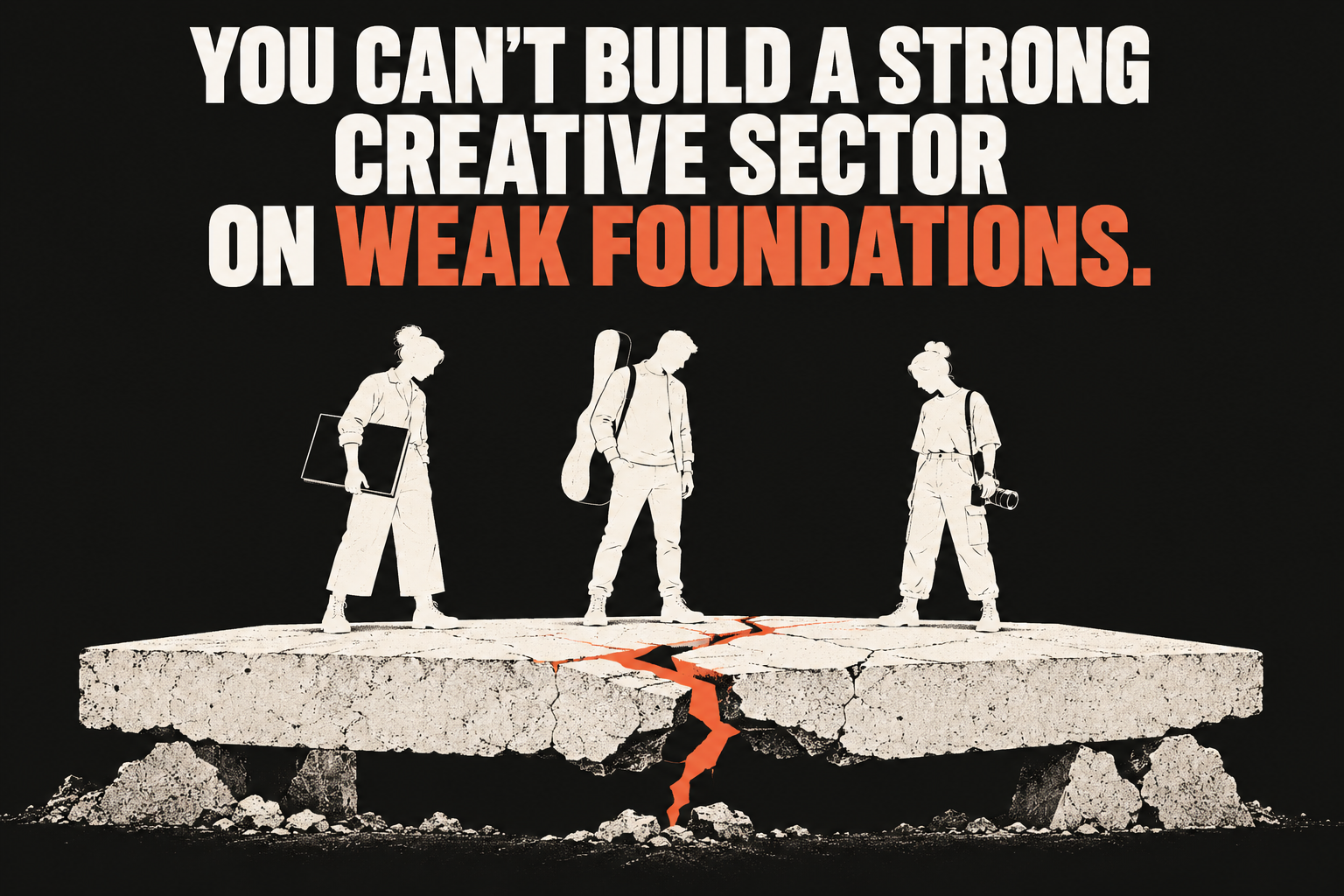
I want Aruba to have a strong policy for its cultural and creative industries. That is one of the reasons we invested in mapping the sector in the first place. But a meaningful policy requires groundwork: understanding the industry, listening to the people working in it, identifying their needs and establishing priorities together. Our disagreement with government concerned both ownership of our research and respect for that process. The minister wanted to accelerate policy development; we wanted to ensure that the foundation was strong enough to support it.
Intellectual ownership is central to the creative economy. People and organisations invest time, knowledge and resources in producing work, and the terms under which that work is used matter. Our mapping research was supported financially by several partners. Government, unlike those partners, had made no financial contribution to the research. We therefore could not consider simply transferring intellectual ownership to government without addressing the investment already made and our responsibilities to those who had supported the work.
The Tijdelijke Werkorganisatie (TWO) was prepared to finance the remaining work needed to complete the mapping initiative, so government would have a document it could use for policymaking. That offered a practical way forward: complete the research and make its findings available to inform a cultural and creative industries policy. However, the arrangement did not proceed because government wanted intellectual ownership as a condition for using the work.
That distinction matters. The proposed support from TWO was funding for completion of the mapping initiative. It was not an agreed purchase of intellectual ownership on behalf of government. The funding would have come through TWO; it would not have represented a direct financial contribution from the department to the research. We could not treat that proposed arrangement as grounds for handing government ownership of work already supported by other partners. Any discussion of ownership required a separate agreement recognising those contributions and interests.
Government’s wish to use the research was understandable and consistent with our ambition for the work to contribute to Aruba’s development. But using research to inform policy and acquiring ownership of it are different matters. There was room to establish terms for access and use while respecting the interests of the contributing partners. A department developing policy for the creative industries should understand why that distinction matters and demonstrate that understanding in its own dealings with the sector.
For us, mapping was also part of a larger process. We wanted to understand who works in the sector, the obstacles they face and the support they need. The findings needed to be discussed with the sector and translated into shared priorities before policy choices were settled. UNESCO’s work on cultural governance supports meaningful civil society participation in policymaking and monitoring, a principle consistent with the approach we wanted to take. UNESCO, Opening up cultural governance through civil society participation
This is where co-creation becomes essential. A policy developed with the sector gives participants a meaningful role in defining the problems, interpreting the evidence and shaping the response. Government brings authority and public responsibility; creative professionals, cultural organisations, researchers and other partners bring knowledge of the realities the policy must address. When government determines the pace and bypasses steps needed for that participation, co-creation loses its substance. People are left responding to decisions they had expected to help shape.
From my perspective, the pressure to move quickly put that shared process at risk. There is already frustration in the sector with policies that do not adequately reflect the experiences of the people they are intended to support. Asking people to contribute their time and knowledge requires trust that their participation will influence the outcome. If essential groundwork is omitted to reach a finished policy sooner, that trust suffers. The document may be completed while questions about its relevance, priorities and implementation remain unresolved.
Government subsequently told us that it would undertake its own mapping to support the CCI policy. To my knowledge, that mapping did not take place, and government instead commissioned an international company to prepare the policy. The Department of Economic Affairs and the minister responsible should explain what research informed that work, how the sector’s needs were established, what influence local participants had over its priorities and how the existing mapping effort was considered. International expertise can make a valuable contribution, but government remains responsible for showing how the resulting policy connects with the industry it is intended to serve.
What troubles me is the opportunity that was lost. Local partners had already invested in the research, and TWO was prepared to support its completion. There was an opportunity to establish fair terms for government’s use of the findings and connect that work with a shared policy process. Instead, the demand for intellectual ownership became an obstacle to moving forward together.
We stood by our responsibilities to our partners and by our belief that a strong policy needed evidence, participation and shared priorities. I still want government to be a committed partner in developing this industry. That partnership requires fair agreements, respect for intellectual work and a willingness to share influence over the direction we take. Completing a policy document is an administrative achievement; building a policy that reflects the sector’s needs, earns its trust and supports meaningful action is the responsibility that matters.